

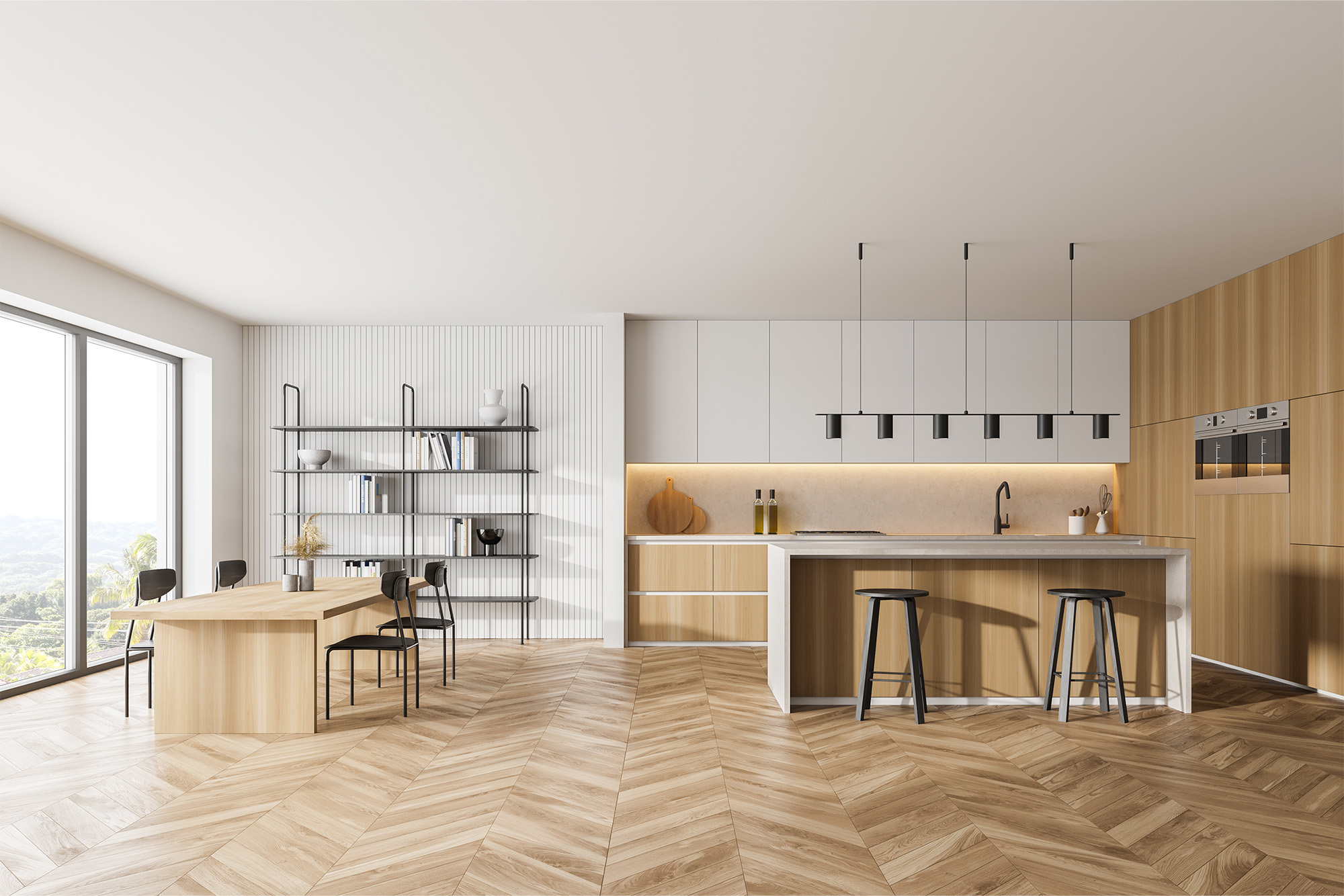
You’ve picked a color you love, maybe even a species—but then the samples hit the table and another decision pops up: How wide should the boards be? Wide planks feel cozy and current, classic strips feel timeless, and mixed-width layouts are suddenly everywhere. The right choice changes how your whole room feels, so it’s worth slowing down and looking at what each style does for your home.
Classic strip: tailored, timeless, and quietly forgiving
Strip floors use narrow boards, usually around 2¼"–3¼" wide. They’ve been around for generations, which is why they instantly feel familiar and “right” in many older homes.
Narrow boards create more seams, which visually break up the floor. That makes them excellent for busy households with pets, kids, and farm boots—dust and everyday wear are less obvious because your eye reads texture rather than a single, continuous surface. In long hallways or tight spaces, strip planks also help rooms feel more proportional instead of overwhelmed by a few oversized boards.
If you like a traditional look or you’re updating an older farmhouse and want to respect its bones, start by browsing the hardwood flooring collection with narrower options and classic finishes like oak, hickory, or maple. In many homes with low to standard ceiling heights, this “tailored” scale feels naturally balanced.
Wide plank: calm, modern, and character-driven
Wide boards—often 5" and up—have a completely different personality. Because there are fewer seams, the floor reads as one continuous canvas, which can make a room feel more open and serene. Knots, grain movement, and color variation are more visible, so each plank becomes a design feature instead of just background.
That drama comes with trade-offs. On long runs in a dry winter climate, wider boards can show seasonal gaps more noticeably than narrow strips. They also tend to highlight any irregularities in the subfloor, so installation details matter. If your home has an open-plan living area, wide planks can be stunning, but in a very small room they may start to dominate the space.
Homeowners who love this look but want a little extra practicality sometimes lean toward wood-look laminate or hybrid constructions. You’ll see a lot of wide formats in the laminate flooring options, where advanced imaging and textures capture the feel of wide hardwood, but with added scratch and moisture resistance that works well for basements or mudroom entries.
Mixed-width: collected-over-time charm
Mixed-width layouts blend two or three board sizes in a repeating or random pattern. The effect is warm, curated, and a bit European, like a floor that’s been added to over the years rather than installed all at once.
This style shines when you want character without going rustic. It softens very large rooms by adding rhythm, but it can also bring life to straightforward ranch layouts by giving the eye interesting movement across the floor. Because your attention moves between narrow and wide boards, mixed widths can be surprisingly forgiving of minor wear over time.
Mixed layouts work best when they’re thoughtfully planned, not improvised on installation day. During a design consultation, we’ll sketch out patterns, talk about which width should “lead,” and coordinate plank scale with elements like cabinet door styles, stair treads, and even shower tile if you’re planning a larger bathroom remodeling project.
How to match plank width to your home
There’s no universal rule that small rooms need narrow boards or big rooms need wide ones, but scale does matter. Think about:
- Room proportions and ceiling height: Wide planks can calm a large, open family room; narrower strips often feel right in cozier bedrooms or hallways.
Orientation is just as important as width. Running boards along the longest sightline (for example, from front door through to the back windows) visually stretches the space, while turning them can help define zones in an open plan. In older farmhouses or bungalows, we also look at transitions: how the plank width will meet original trim, existing tile, or stairs so the home feels cohesive instead of “new floor, old everything else.”
If you’re a visual thinker, it helps to look at real rooms rather than loose samples. The gallery in our completed project portfolio is a good way to see how different plank widths behave once the furniture is in and the lighting is on.
Bringing it all together with design support
Choosing between strip, wide, and mixed-width wood looks isn’t just a technical decision—it’s about how you want your home to feel through every season, from summer humidity to winter snow boots. As an interior design studio, we look at flooring alongside wall color, cabinets, and even window coverings so the planks you choose support the life you live, not just today’s trend.
If you’re ready to compare options in person and talk through what fits your rooms, style, and budget, you can request a consultation and we’ll help you narrow in on the width and material that truly suits your home.


