

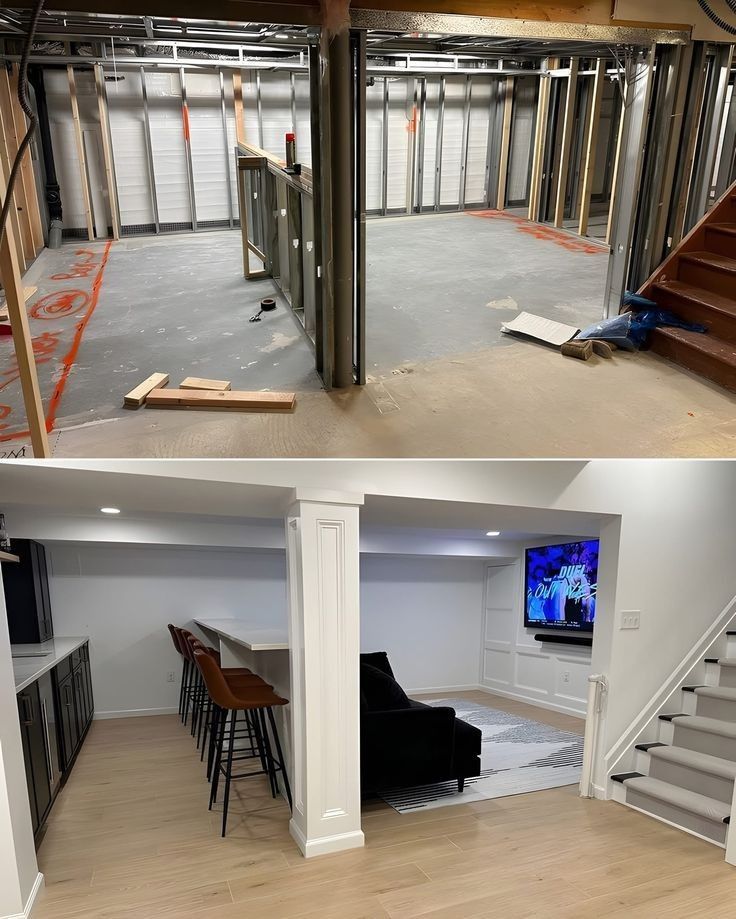
Picture a summer storm rolling through, the sirens sound, and everyone heads downstairs. Your basement is where kids spread out toys, teens watch movies, and guests stay over. It’s also where concrete, moisture, and temperature swings can be tough on finishes. That’s why choosing the right “wood look” flooring below grade isn’t just about style; it’s about how that surface will behave in real life.
How Laminate Behaves in a Basement
Laminate is essentially a dense fiberboard core with a printed image layer and a durable wear surface on top. It’s beautiful, budget-friendly, and can work in a basement—but only when conditions are right.
In a below-grade space, the slab will always be cooler than the air above it. That temperature difference can draw moisture through the concrete. Traditional laminate doesn’t like standing water; if moisture makes its way into the seams, the core can swell, edges can curl, and boards may need to be replaced. Even “water-resistant” products have time limits on how long spills can sit.
When we look at laminate flooring options for a lower level, we start with the room’s history: any past seepage, musty smells, or visible efflorescence on the concrete are red flags that need to be addressed before style comes into the conversation.
When Laminate Can Be a Smart Choice Below Grade
A dry, well-behaved basement can absolutely enjoy the warmth and character of laminate. The key is to think like a designer and like an inspector at the same time.
First, we look for stability: no recent water events, a dehumidifier keeping humidity in check, and good drainage outside. Next, we plan the right installation system. A quality vapor barrier underlayment is non-negotiable. It helps protect the core from moisture vapor and softens the feel underfoot so the room feels more like a main level, less like a concrete box.
Style matters, too. In family rooms or guest suites, wider planks and low-sheen finishes help disguise everyday dust and footprints. If you’re trying to coordinate with upper floors, it can be helpful to compare tones across laminate, vinyl, and hardwood in one place; the flooring inspiration galleries are a useful way to see how different looks play out in real rooms.
In these dry, finished basements, laminate shines as a warm, wood-look surface that keeps budgets in line while still feeling intentional and designed.
When You’re Better Off Choosing Luxury Vinyl or Tile
If your home sits in a spot that’s prone to seepage, if you’ve ever had a sump pump scare, or if the basement doubles as a mudroom from the fields, it’s time to think beyond laminate.
Luxury vinyl planks and tiles handle moisture far better because they’re built on waterproof cores. They still deliver the wood or stone visuals families love, but they won’t swell if a small leak goes unnoticed overnight. Porcelain and ceramic tile go one step further; they’re ideal near exterior doors, utility areas, or in basements that include a full bath. The same design eye that chooses the right plank can also pull together bathroom remodeling finishes so the shower, vanity, and floor all feel cohesive with the rest of the lower level.
In many Northeast Kansas and Southeast Nebraska homes, we’ll often blend surfaces: perhaps luxury vinyl in the main rec space, tile closer to exterior doors, and carefully selected laminate upstairs where moisture is less of a concern. The goal is always the same—a continuous look that respects how each area is used.
Designing a Basement That Feels Like Part of the Home
Flooring is just one layer of a successful basement. Lighting, wall color, and furnishings all play into how welcoming that space feels on a snowy January night or a humid July afternoon.
Because basements tend to have less natural light, we often lean into lighter wood tones, soft paint colors, and layered lighting to keep things from feeling cave-like. If you’re curious how a professionally coordinated lower level comes together, the finished spaces in the project gallery offer helpful real-world examples of flooring, color, and texture working as a whole.
When we meet one-on-one with a homeowner, we’re not just choosing a product; we’re designing a place where movie nights, sleepovers, and quiet Sunday afternoons actually happen. That’s the standard every basement floor has to live up to.
If you’re weighing laminate against other options for a below-grade space and want a tailored plan for your home, you can request a consultation to walk through moisture concerns, style goals, and budget with a designer who understands how our local basements really live.


