

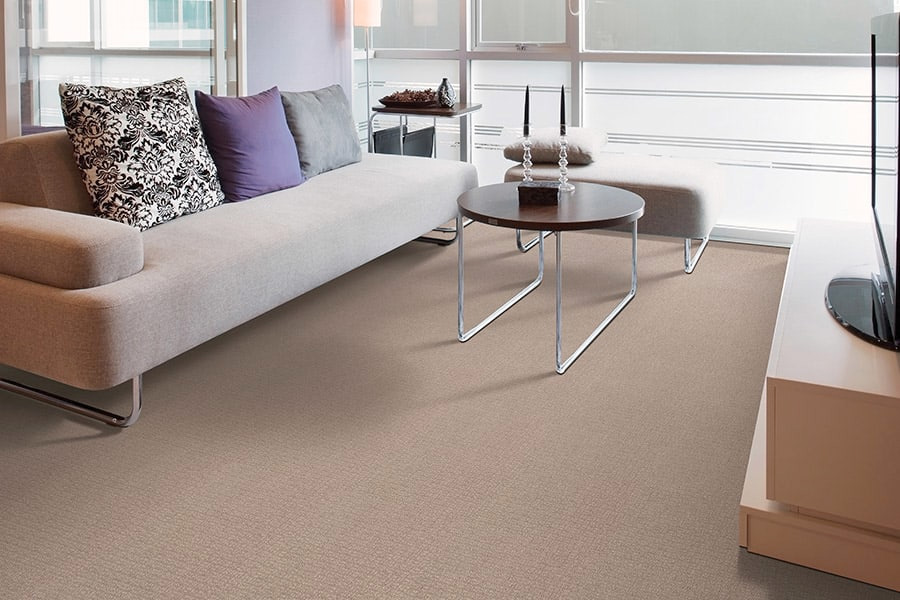
Choosing carpet for an entire home sounds simple until you realize how differently each room is used. A quiet bedroom asks for something very different than a busy hallway, and an open family room needs to connect with nearby spaces without making everything feel flat. The goal is not to pick one thing and hope it works everywhere. The goal is to create a plan that feels cohesive and personal.
Start with the way you live, not just the color you like
A whole-home carpet plan works best when it begins with movement, routine, and comfort. Think about where shoes come off, where kids sprawl on the floor, and which rooms need the softest landing at the end of the day. In many homes around Sabetha, that also means paying attention to seasonal realities—wet boots in winter, spring mud, and the day-to-day wear that comes with an active household. When you begin with function, the style decisions become much clearer.
That is why it helps to compare textures, patterns, and construction in a broader carpet selection before narrowing in on a favorite. You can love the look of a plush surface, but if a loop or patterned option fits your traffic better, the smarter choice is often the one that still looks beautiful after real life happens.
Use one foundation, then create quiet variation
Custom does not have to mean every room gets a completely different look. In fact, too much variety can make a home feel disconnected. A stronger approach is to choose one visual foundation—often a color family or overall softness level—then shift the details from space to space. That might mean a subtle pattern in a hallway, a more luxurious feel in the primary bedroom, and something forgiving in rooms where gathering happens often.
If you are weighing the differences between fiber types, texture, and long-term performance, the practical guidance in this carpet care and buying guide can help you make decisions with more confidence. The most successful plans usually balance beauty with realism, so each room feels intentional without looking overly matched.
Let adjoining finishes do some of the design work
Carpet never exists in isolation. It meets paint, trim, stair details, hard surfaces, and sometimes a nearby remodel. That is where a whole-home strategy becomes especially valuable. A warm neutral underfoot may feel entirely different once it sits next to crisp cabinetry, natural wood tones, or a dramatic wall color. Seeing those elements together keeps you from choosing something that works in one room but feels off everywhere else.
In homes near Hiawatha and across northeast Kansas, that layered thinking is often what makes a finished space feel settled rather than pieced together. Looking through recent interior projects can be helpful here, because you can see how flooring, color, and room-to-room transitions support one another instead of competing for attention.
Personalization happens in the consultation
What makes a whole-home carpet plan feel custom is not just the product. It is the editing process behind it. A designer can help you notice where continuity matters, where softness is worth the upgrade, and where durability should lead the decision. That kind of one-on-one planning is especially helpful when you are trying to coordinate multiple rooms without overcomplicating the house.
If you want a better sense of how that design approach comes together, you can learn more about the studio’s design philosophy and team. Good carpet planning is less about following a formula and more about creating a home that supports your routines, reflects your taste, and still feels welcoming years from now.
A thoughtful whole-home plan gives you consistency without sameness, which is exactly what makes it feel tailored. If you're ready to sort through options with a designer’s eye, you can start your design consultation.


