

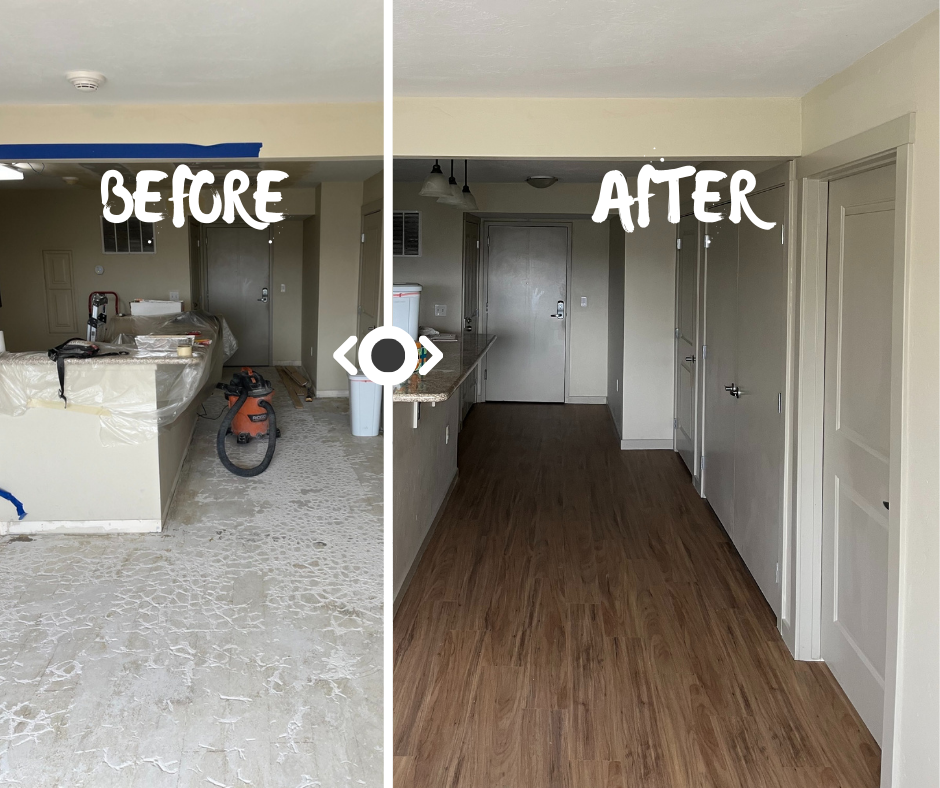
You know that one hallway you always flip the light on for, even in the middle of the day? Or the small guest room that never feels quite inviting, no matter how many lamps you add? Often, the quickest way to change how bright a space feels isn’t another light fixture—it’s the color and finish of your floors.
As designers, we think of flooring as a giant reflector. The right tone can bounce daylight around a narrow corridor or make a compact bedroom feel more open, especially in our long Midwestern winters when natural light is precious.
Why Floor Color Changes How Bright a Room Feels
Light behaves like a ball: the more it “bounces,” the brighter a space feels. Pale, soft-toned floors reflect more light, while darker planks absorb it. That doesn’t mean everything needs to be white; it’s about choosing undertones and finishes that work with your walls, trim, and the direction of the sunlight.
Laminate is especially helpful in tricky hallways because many laminate flooring options come in lighter wood looks with subtle variation, which breaks up long, dark stretches without showing every footprint. Hardwood can do this as well, but the sheen and grain pattern become more important, since real wood reacts more to light over time.
Light, Warm Woods for Cozy Brightness
If a space feels cold and shadowy, start by looking at light, warm wood tones—think natural oak, hickory, or maple in pale honey or sand shades. These colors brighten a room, but the warm undertone keeps it from feeling stark or sterile.
In older farmhouses or ranch-style homes, warm-toned planks can bridge the gap between existing trim and fresher paint colors. A narrow hallway with golden-beige laminate running lengthwise will appear longer and more open, while the warm shade softens every doorway it passes. For homeowners who love the character of real wood, browsing a curated hardwood flooring collection is a good way to compare how different species handle light and warmth.
Design tip: If your hallway has very little natural light, avoid strong yellow or orange floors. Instead, choose a neutral warm tone—something that feels like natural wood in soft morning light.
Soft Grays and Greiges in Small Rooms
Small bedrooms or offices often benefit from soft gray or greige floors—tones that sit between gray and beige. These colors are helpful when you have cool wall colors (blues, greens, crisp whites) but still want the room to feel welcoming.
Laminate in a pale greige works beautifully in compact rooms because:
- It visually recedes, letting rugs and furniture stand out instead of the floor dominating the space.
A subtle, low-contrast plank pattern keeps the eye moving, which makes a small footprint feel less boxed in. If you’re unsure how a particular tone will look with your existing finishes, it can help to compare it against completed projects in a before-and-after gallery to see how similar colors behave once installed.
When to Use Whitewashed or Very Light Floors
Whitewashed or almost-bleached looks can be stunning in dark areas, but they need thoughtful pairing. In a tight hallway, very light floors can make the space feel airy and modern, especially when they run continuously into adjoining rooms. However, they will highlight contrast: dark doors, baseboards, or stair treads will pop more strongly.
In homes with kids, pets, or muddy boots, ultra-pale laminate is often more practical than pale hardwood, because many laminates are designed to disguise everyday wear. The key is to choose a finish with gentle variation—a mix of soft planks rather than a flat, solid tone—so dust and crumbs don’t become the star of the show.
If you’re considering updating a small bath at the same time, coordinating light-toned hallway planks with brighter bathroom remodeling finishes can help the entire end of a house feel more open and cohesive.
Pulling It All Together in Your Own Home
Floor color is just one piece of the puzzle, but it’s a powerful one—especially in dark corridors, basements, or compact rooms common in this part of the Midwest. The right tone, sheen, and plank direction can make a hallway feel wider, a guest room feel larger, and a small home feel more connected from one space to the next.
If you’d like help choosing between laminate and hardwood, pairing floor colors with your walls, or planning a full “floor-to-ceiling” refresh, you can request a consultation to sit down with a designer and work through your specific rooms together.


